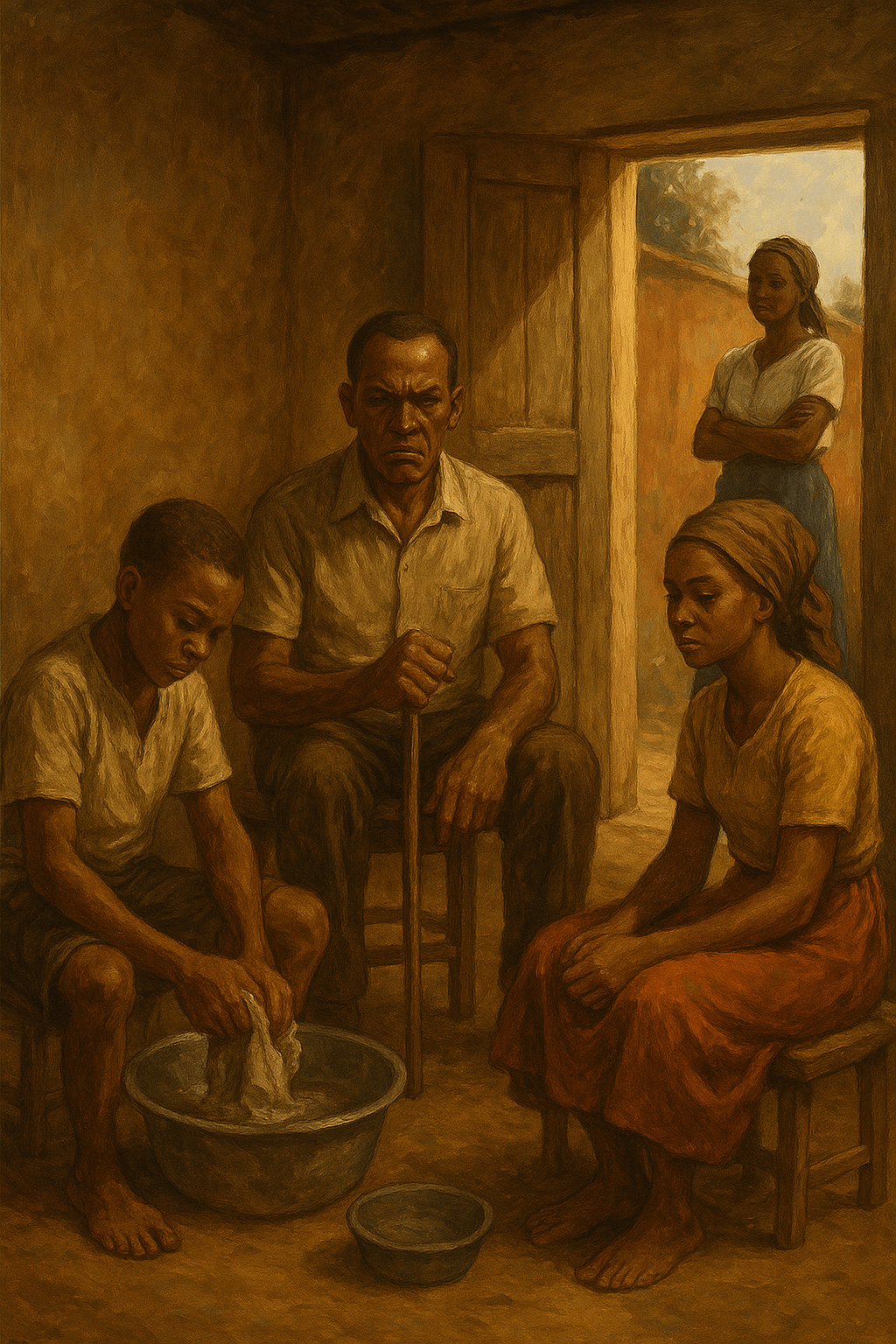
They say African households are something special, and yes, they are.
There are stories we always share with laughter when we grow up, stories that echo through family gatherings and quiet evenings. Like how Sundays were sacred, no questions asked. Once, a story was told about a mother who, on Sundays, would lock the house tight. Anyone who didn’t go to church had to step outside and stay locked out. So the choice was clear: stay home, do chores, but be alone outside or go to church with the rest.
Then there was the father who bit his son bitterly for bad associations, for not greeting elders properly, for slipping grades, for wearing clothes deemed unfit.
For those who couldn’t use hands, there were words that cut deeper i.e. “Ona, niliuza ng’ombe nikapeleka ng’ombe nyingine shule” a phrase that sticks like a scar.
These were hard-taught manners, rules set with iron hands and firm voices. But they stayed. They did their job.
Somewhere between the stern lessons and the sharp words, a child grew, sometimes angry, sometimes scared, often confused. They carried the weight of punishment, the fear of failing expectations that seemed bigger than them. And sometimes, when the house fell silent, they asked themselves: “Was it all worth it? Was I ever truly free, or just trying to survive?”
But years later, looking back, that child, now grown, sees the subtle roots beneath the hard soil. Those rules, those fears, that discipline; they shaped faith, built resilience, and crafted respect.
Maybe it wasn’t perfect. Maybe it hurt. But without it, who would they be?
That child, now carrying the weight of years and memories, might sometimes try to shed those lessons like old skin, afraid that holding on means never truly breaking free.
They might want to say, “No more rules. No more fear. No more control.”
But here’s the quiet truth many only realize later: those hard lessons, even if planted by fear, grew something real inside.
The discipline that once felt like chains became the framework holding up a fragile world.
The prayers said under pressure whispered a language of faith when there was nothing else to cling to.
The harsh words and punishments taught boundaries, respect, and the shape of right and wrong, even if the delivery was imperfect.
And when the world outside grew wild and confusing, those lessons were there; sometimes hidden, sometimes loud; to guide, to steady, to remind.
Self-healing isn’t about tearing down the past or hating the roots that bore you.
It’s about looking at those roots closely and deciding which to nourish and which to loosen, which parts to carry forward with love, and which old pains to finally set down.
Because to reject it all is to risk breaking something inside; a loss of identity, a tearing away from the very ground that made growth possible.
So this grown child learns to sit quietly with the past not as a victim or a prisoner, but as a gardener tending to a complicated tree.
Some branches may need trimming.
Some wounds need time and care.
But the roots?
The roots run deep, anchoring everything.
And in embracing that, this person finds strength; not from perfection, but from truth. From the messy, painful, beautiful story of where they came from.
That story is theirs, always. And it holds them, even when the fear is gone, even when the control fades.

 WAZA
WAZA 