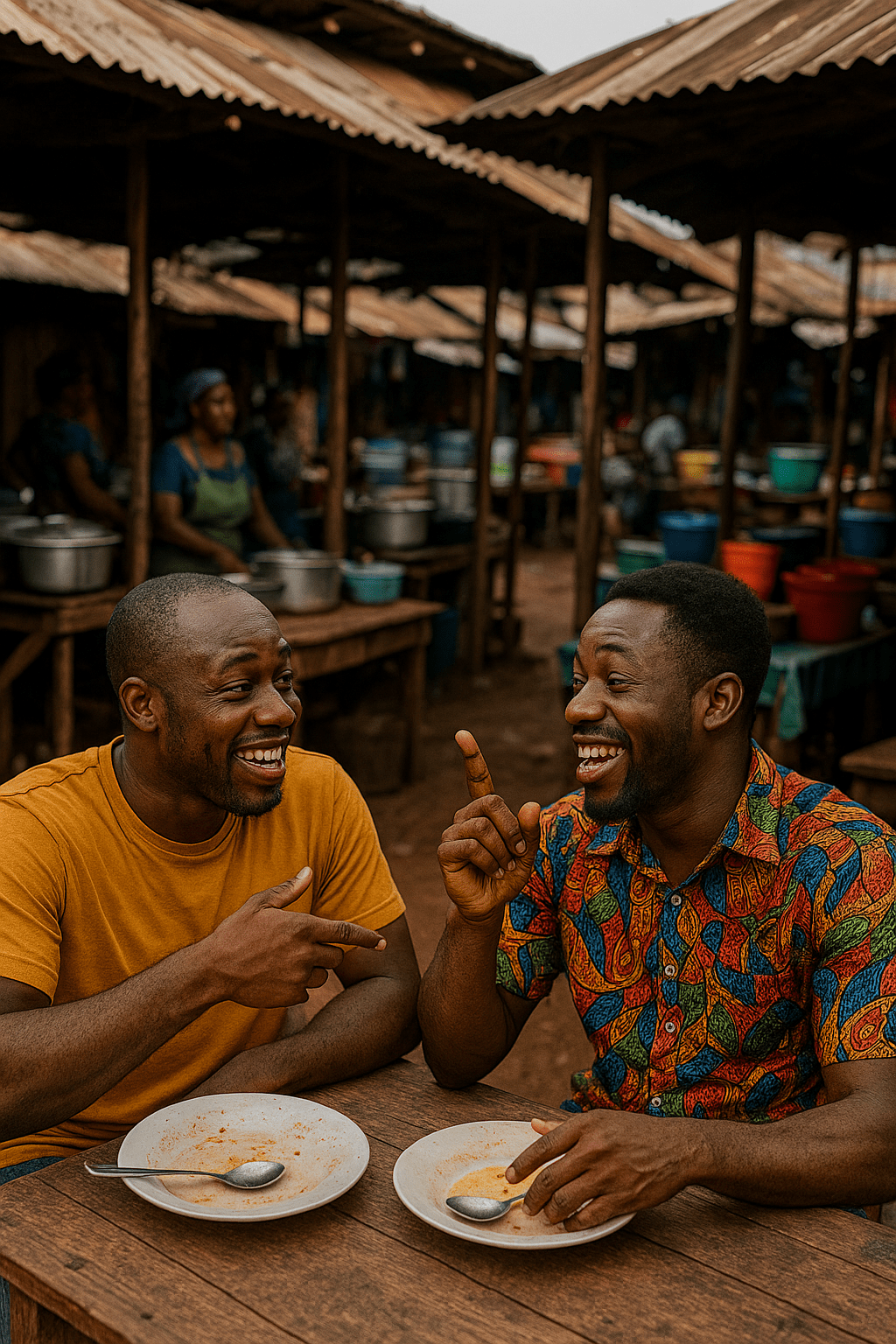
Growing up, we had many friends. Then life scattered us; school, families shifting, new cities, new jobs. When we meet again, much has changed, but certain things always remain.
One of those friends was my childhood neighbor. We went together for Mafundisho. Everyone believed he would become a priest. He didn’t. Yet when I met him again six years later, in his office for business, I could still see those traces in him; the tone, the calmness, the way wisdom slipped into his words.
After the meeting we went for lunch. It was Friday in Dar es Salaam, Biriyani day. The waiter, however, brought us Mandi instead. My friend simply nodded and started eating. I asked him, “Didn’t you order Biriyani?” He replied, “I came here for food. And here is the food.”
Then, as he always does, he turned that small moment into a lesson.
“Our purpose here was lunch, not Biriyani. Biriyani is only one way of achieving that purpose. Whatever arrives on this plate, as long as it feeds me, it fulfills the purpose.”
He told me we should always search for the purpose, in everything. Because often, we forget it.
That conversation stayed in my head long after. I began asking myself: how many times have I left the purpose behind and gone chasing the crowd? How many times have I chosen not because my soul was at peace, but because the crowd had already clapped for me in advance?
The crowd is never still. Today it shouts, “This is the thing!” Tomorrow, it whispers, “That thing is old.” It is designed to shift, because that is how fashions, brands, and trends survive, they move you away from purpose, so you must keep chasing.
Sometimes I wonder, how often do we forget the purpose and let the crowd push us forward? We start something for a reason, but somewhere along the road, the reason disappears, and all that is left is the pressure to be seen.
Take possessions, for example. A car begins as a tool to move you from one place to another. But slowly, it becomes a symbol. Not of movement, but of class. And the class the crowd admires today will not be the same class tomorrow. The crowd is already planning to shift.
Or think of the phone. At first, you buy it to communicate, to work, to connect. But after a while, the crowd whispers that this one is outdated, slow, behind the times. Six months later, the same phone that served your purpose perfectly is mocked as cheap, old, embarrassing.
Even houses are not safe. You may build one styled in the fashion of the time. But fashions shift, and what once looked prestigious can quickly feel like a mistake, because the crowd’s eyes have already turned elsewhere.
The challenge is you cannot always run with the crowd. To keep up with them demands endless energy, endless money, endless youth. And no one has those forever. Sooner or later, you will get tired. You will grow older. Your pockets will run dry. Your strength will fail. And when that moment comes, the crowd will not slow down for you, it will simply move on, leaving you behind. If all you had was their applause, then you will be left empty. But if you had purpose, then even when the legs can no longer run, the soul will remain at peace.
And it goes deeper than things. Think of family itself. The purpose of a family is reproduction; not just of children, but of love, of peace, of strength, of wealth, of togetherness. Two becoming one so they could become more than two. But if one approaches family with the pressure of the crowd, comparing weddings, competing in status, prioritizing show over substance; then even the little things can be lost. The family may fail to reproduce even peace, even joy.
Maybe the same with work. Work is meant to provide for you, to shape you, to help you serve a function in society. But if you chase the job the crowd approves, you may end up in a title that empties your soul. You arrive with prestige, but go home hollow.
Maybe the same with friendship. A friend is meant to walk with you, to sharpen you, to share life. But if you seek the ones the crowd celebrates, you may find yourself in rooms full of people yet lonely at heart.
And then there is morality. This is the part many avoid today, but it might be the most urgent.
There was a time when honesty, faithfulness, patience, and kindness were not debated, they were the foundations. Today, the crowd has built other standards. To cheat and succeed is called smartness. To stay faithful is mocked as weakness. To be kind is treated as naïve. What was once shameful is now celebrated as bold. What was once dignified is now dismissed as old-fashioned.
But morality is not a fashion. It does not shift with seasons. A lie will not become truth just because the crowd cheers for it. Dishonesty may win applause today, but it will still rot the soul tomorrow.
Maybe this is the most dangerous part of living by the crowd; that what they call good today, they may laugh at tomorrow. And if your values are tied to their moods, then your soul will always be in conflict.
The purpose of morality has never been popularity. It is to guard peace, to protect relationships, to preserve dignity. A moral act is not for the crowd’s approval; it is for the soul’s survival.
So mute the crowd. Ask your soul. Is this thing I am doing truly good, or is it only fashionable? Does it serve purpose, or is it only performance?Will it last, or will it vanish when the crowd moves on?
To mute the crowd is not to silence the world. It is to give space for your soul to answer: why this, and not that?
Mute the crowd. Ask the soul.

 WAZA
WAZA 